Educational Philosophy
I believe that the point of education for students is for them to be in an environment with peers where they are exposed to new material and ideas. This will then equip them with a solid foundation for their own ideologies and expressions. This runs parallel to my personal definition for art; the expression of an idea or an expression through a medium. Art holds an essential part in education and is oftentimes the key component for students being able to express their individualism. As an art educator I will create an environment where students will perform to their personal standards to feel uniquely fulfilled and challenged academically in the classroom. I will advocate for students and provide them with additional opportunities for success. I believe holding a balance of professionalism and pragmatism is essential to creating a relaxed yet academically fulfilling atmosphere for students.


Reese Girdner was born and raised in Cozad, Nebraska and is now an undergraduate student at the University of Nebraska-Kearney (UNK). He is pursuing a Bachelor of Arts in Education with a Minor in 3D Art. He has had work displayed in The Brickwalk Gallery in Kearney, NE, the Artists' Cooperative Gallery in Omaha, NE, the LUX Center for the Arts in Lincoln, NE, and has also had artwork featured in The Carillon, UNK's Literacy and Art Journal.
Artist Statement
My work serves as a metaphor for the varied human experience along with how we carry loss, purpose, memory, and change. The work is altered to ask quieter, more personal questions about what it means to endure, remember, and most importantly, what it means to become. My work explores duality between opposing themes like protection and vulnerability, mourning and perseverance, and stillness and transformation.I create with the intention of my work acting as thresholds between absence and what it truly means to continue forward. My pieces offer space for viewers to contemplate their own losses and acts of becoming rather than answers. While these pieces do not promise comfort or certainty, they do offer possibility, and sometimes, that is enough.
Download PDF
Stravinsky & Nijinsky Wax ResistRomero Britto PumpkinsWeaving Unit
Radial Plate WeavingPaper Weaving
Stravinsky & Nijinsky Wax Resist

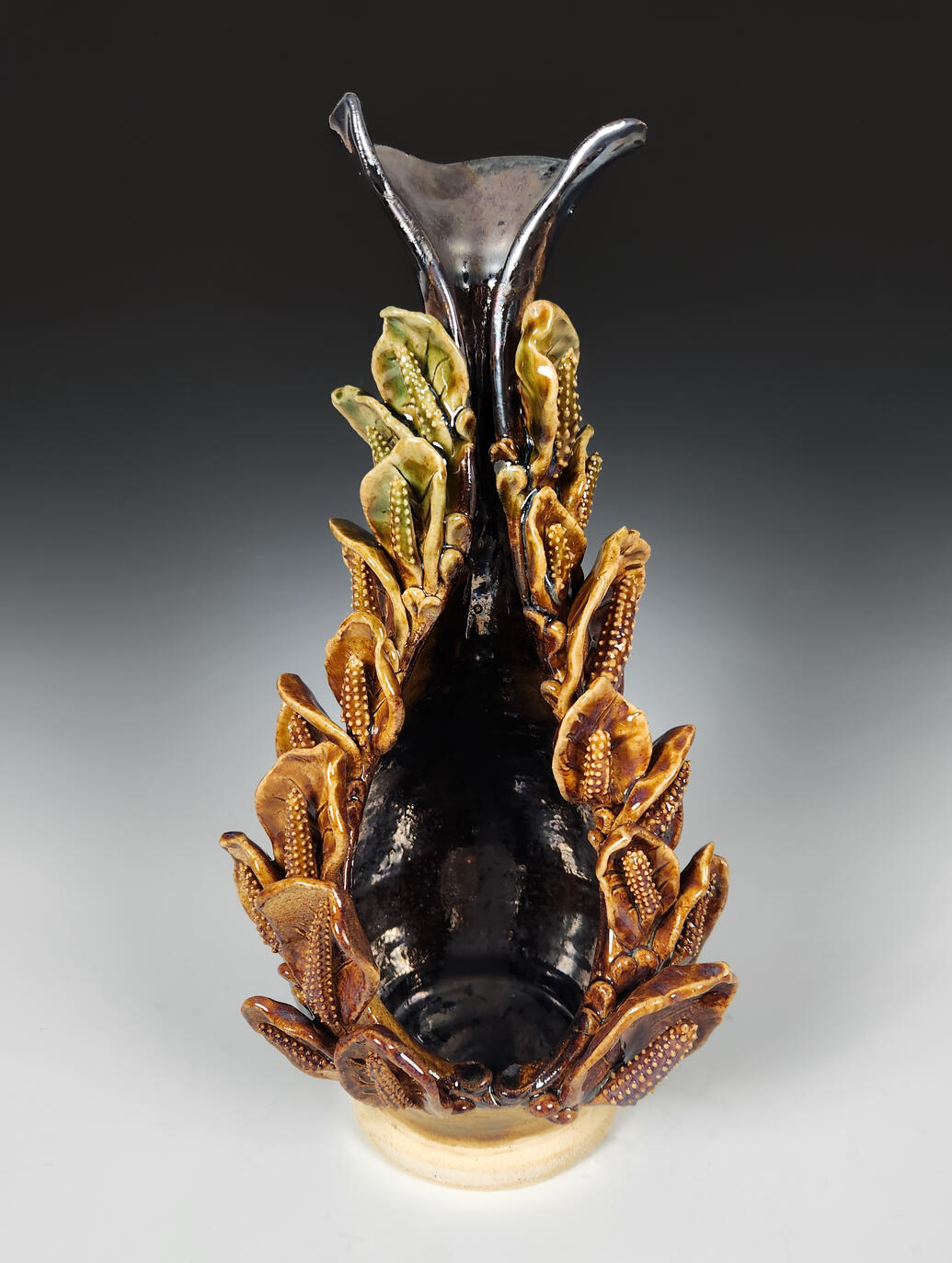
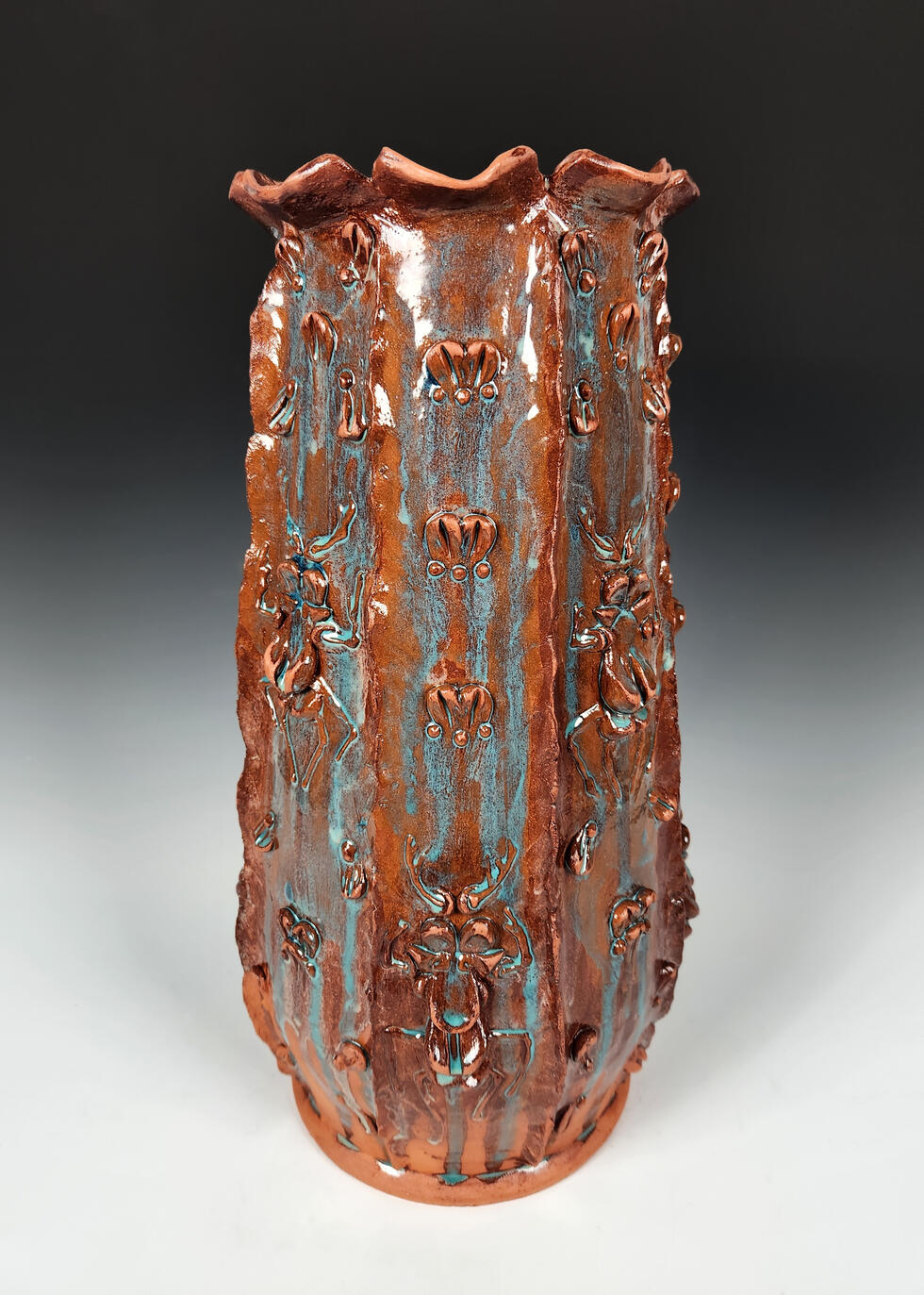
Spring is often heralded as a symbol of rebirth, renewal, hope, and carries with it long-standing ties to fertility, youth, and growth. It arrives draped in softness, cast as the triumphant end to winter, a season we often associate with stillness, scarcity, and cold endurance. Yet beneath this comforting veil, I’ve come to feel that spring and winter share more than we’d like to admit.Both seasons mark their own thresholds. Winter teaches us how to survive the quiet and how to make do. Spring demands something harder: the courage to change. Its first blossoms carry the promise of new beginnings, and the ache of what must be shed to make room for them. Spring is tender, but it is not gentle, and transformation rarely is. As the earth thaws and petals unfold, we are reminded that nature blooms on its own timetable, without any regard for our own growth. In this way, spring mirrors our internal seasons, hopeful yet heavy, beautiful yet bruising.My piece sits within this tension. It holds space for the bittersweet truth that renewal is never simple, but in that complexity lies its quiet power. Spring does not promise ease; it promises possibility. And sometimes, that is enough.


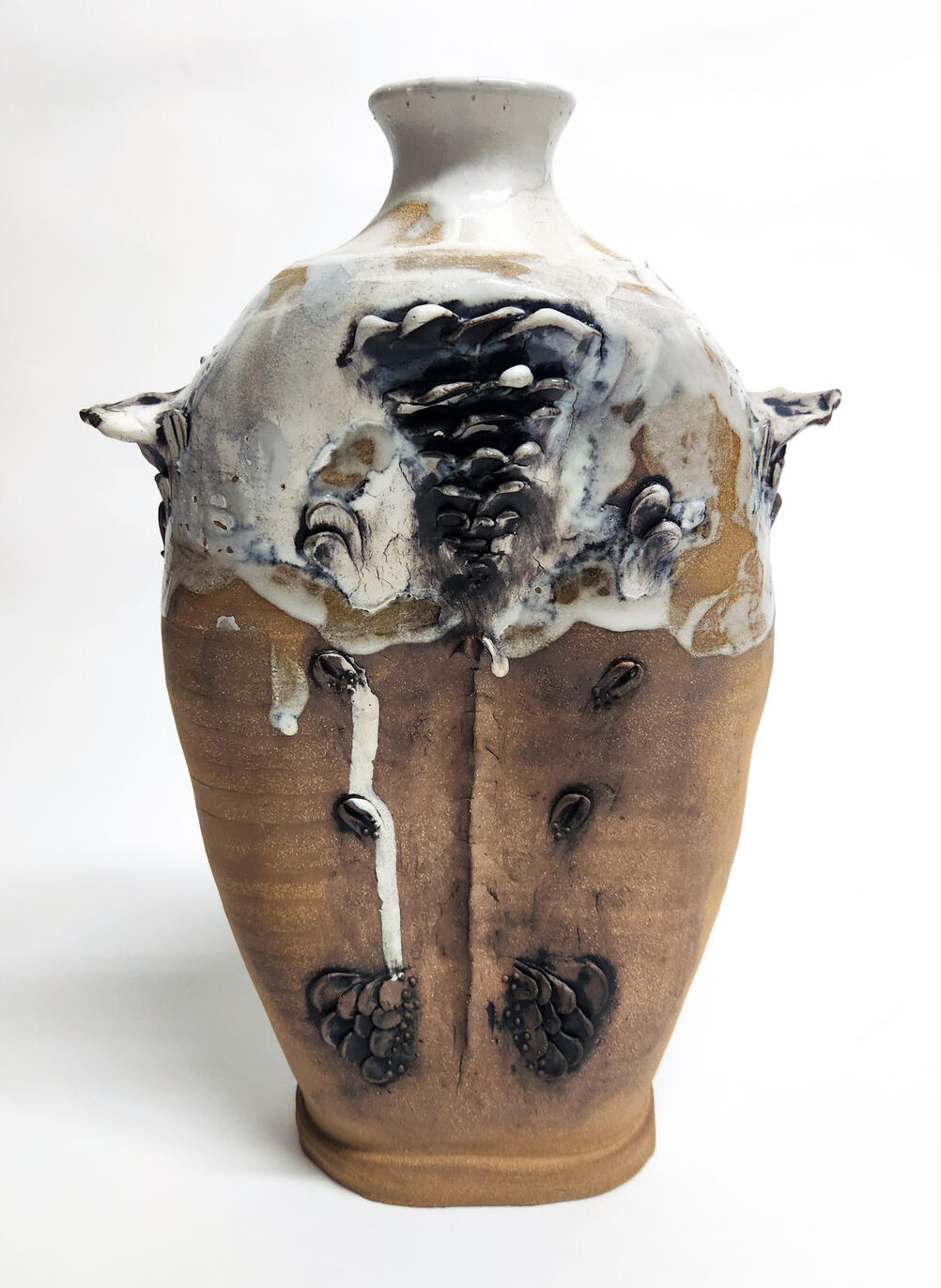
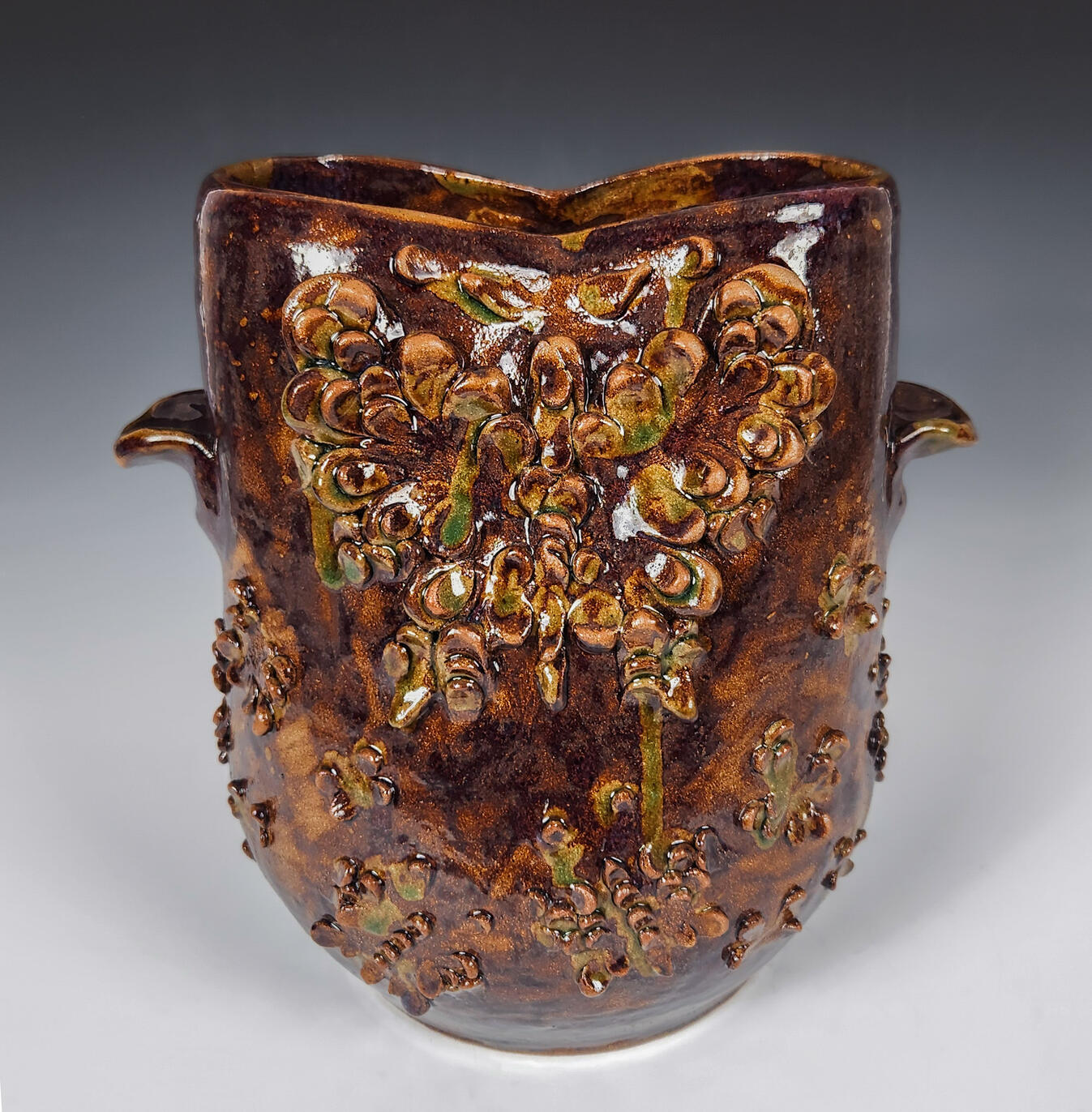
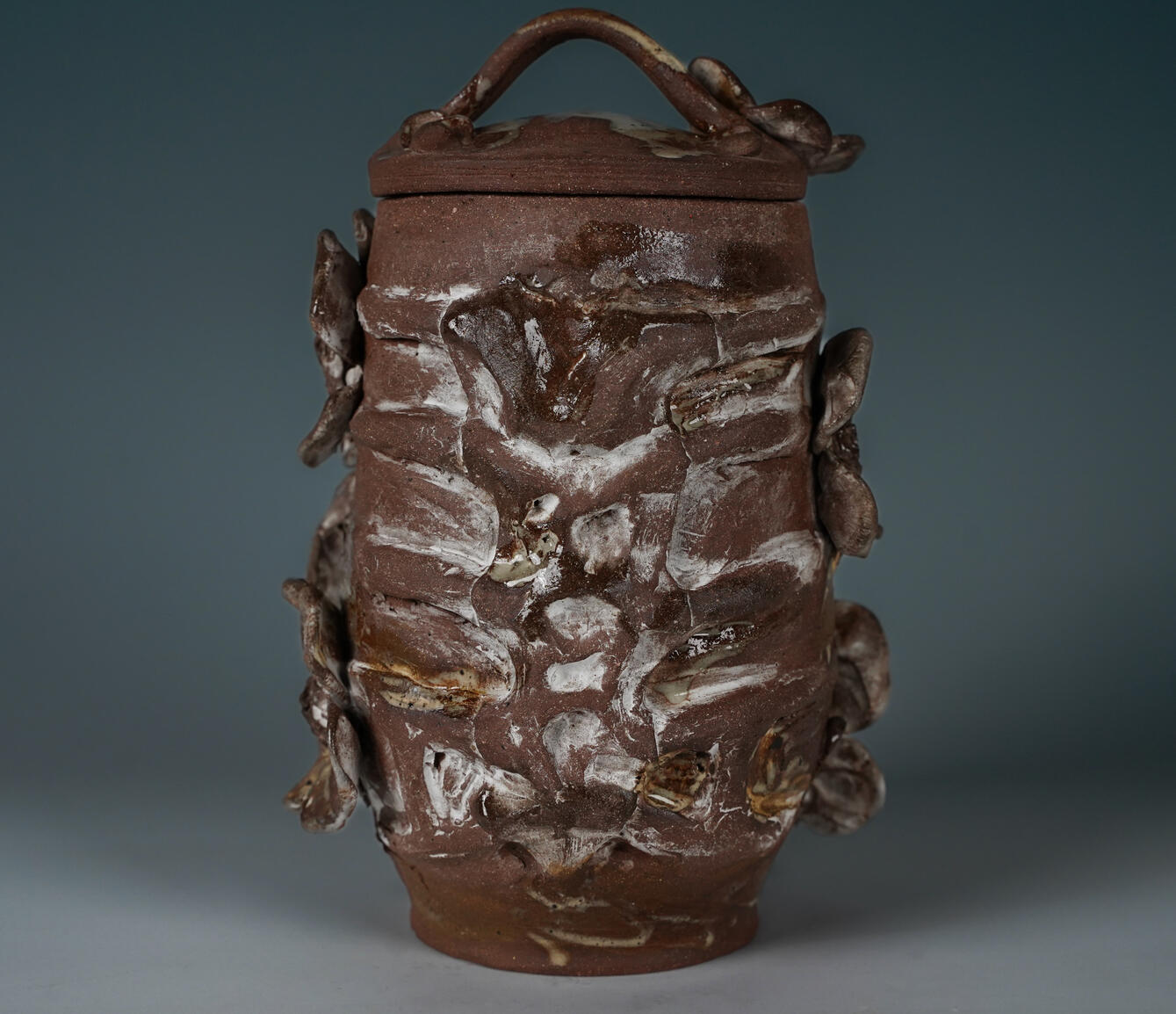
When it comes to the poppy flower, its petals carry the weight of sacrifice, remembrance, eternal sleep, and peace, yet I find its connection to the Greek Goddess Demeter to be the most compelling. Though poppy symbolism follows Demeter in droves, there are two myths that stuck out amongst the rest and within both, themes of death, loss, and remembrance are close to follow.In the first, Demeter immortalizes her mortal lover as a poppy after his death, and in the other, the gods gift her a poppy to soothe her grief after Hades' abduction of her daughter Persephone. Across both stories, the poppy is a symbol of mourning, but also becomes more complex where it also serves as a symbol of perseverance.My jar reflects this same duality. Its surface bears a ribcage, a symbol of protection, but also as a reminder of vulnerability. Like the ribs that guard the heart and lungs, the jar reserves space for remembrance and endurance. The poppy, much like the ribcage, preserves what is vital. It serves as a reminder that what has been lost is never really gone, because it becomes the fertilizer for something new to grow.


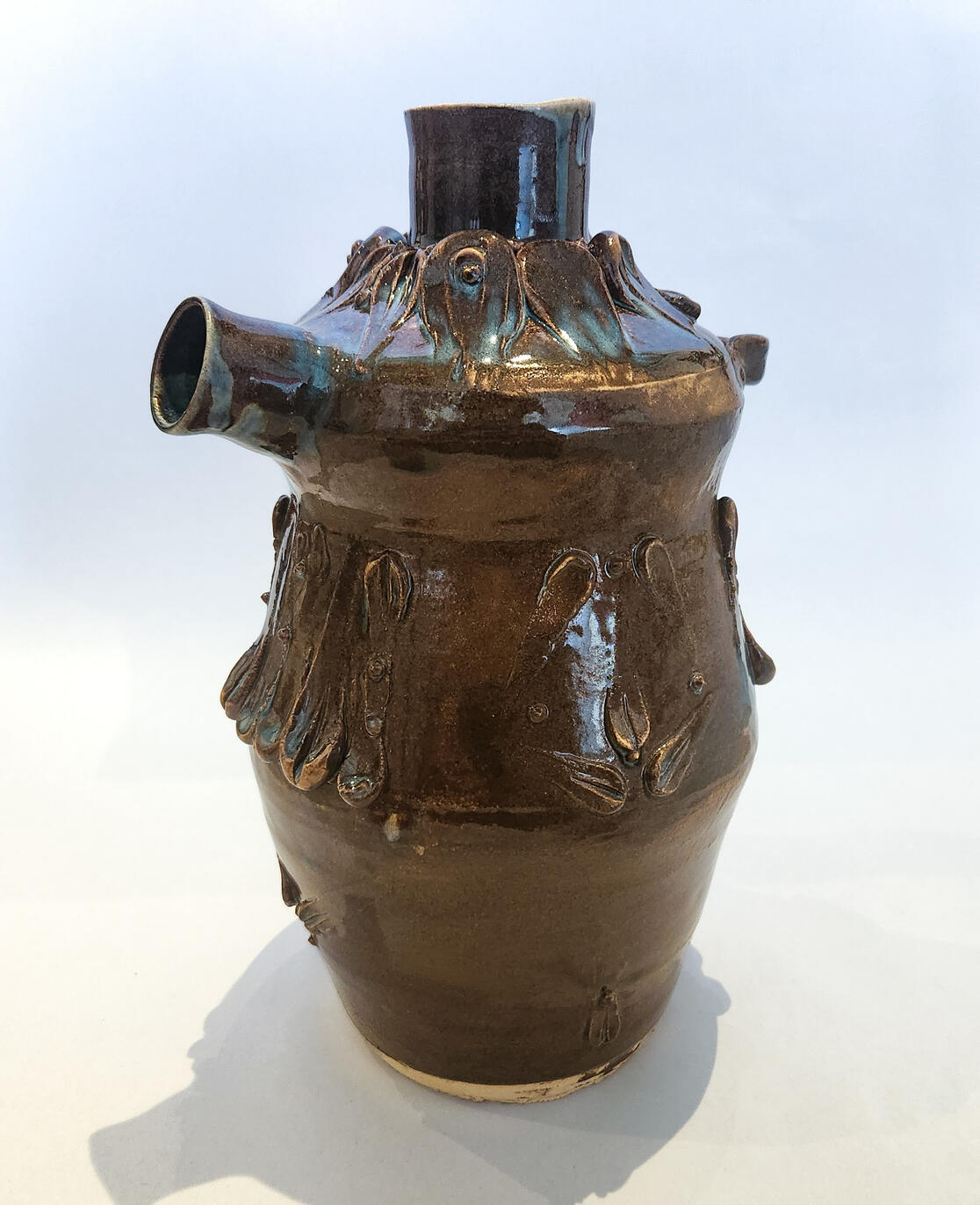
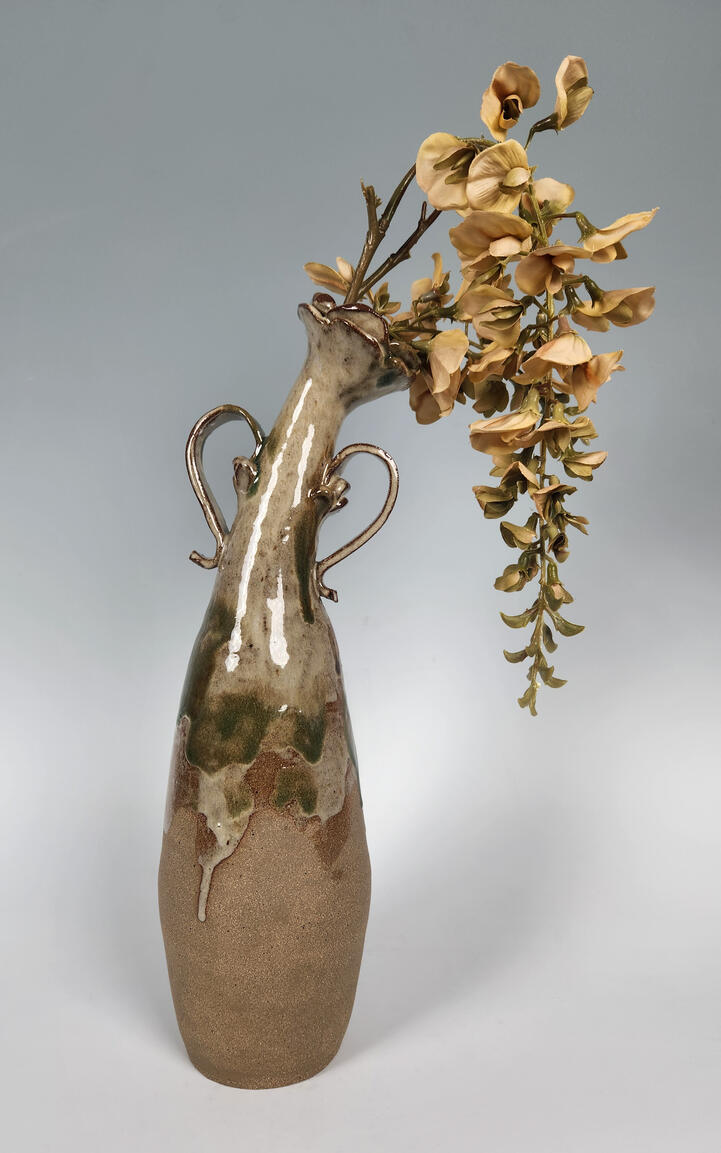
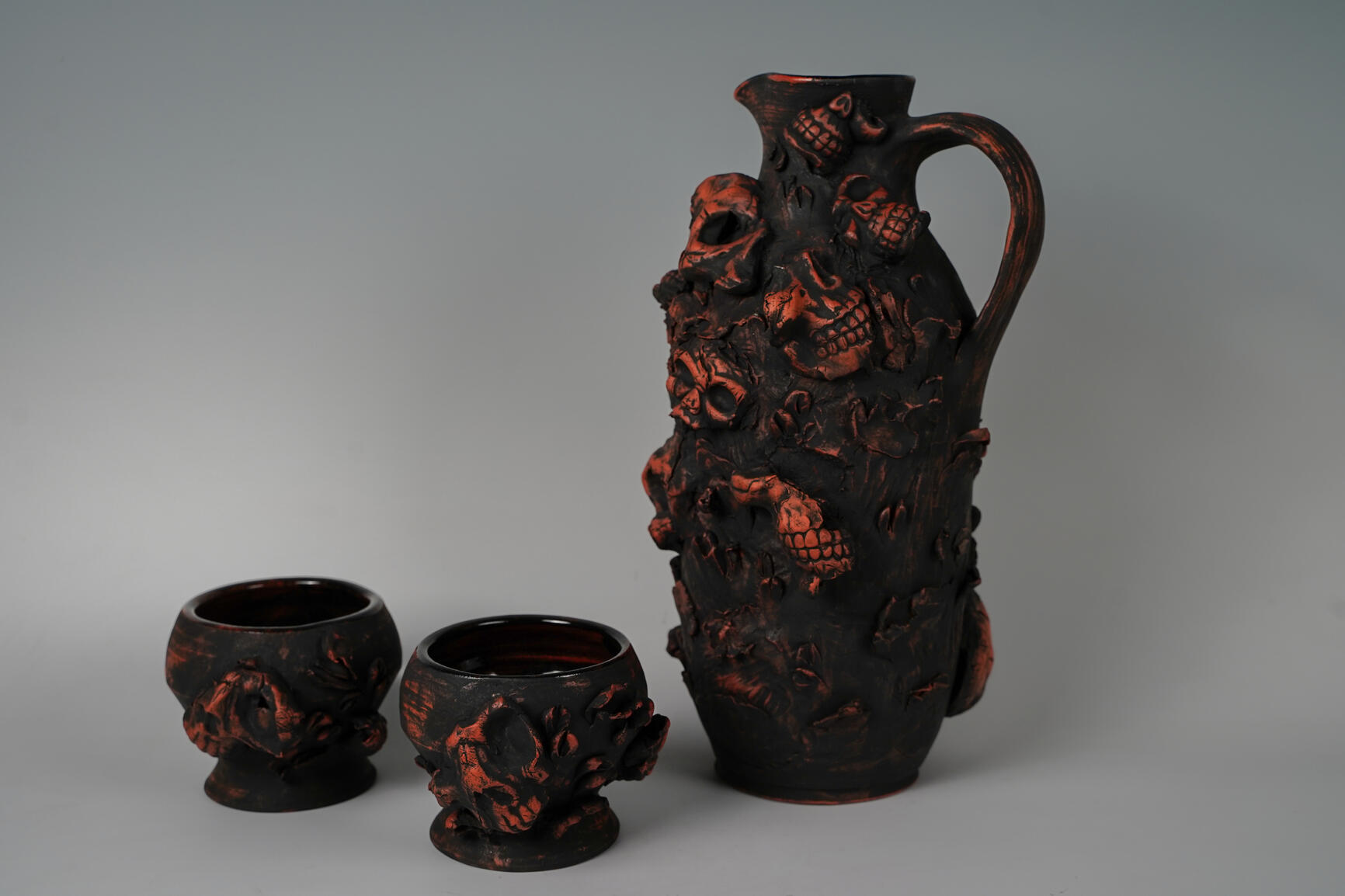
There have always been vessels meant to store wine or valuables as offerings to the dead. With a pitcher that imprisons the spirits of the deceased dreading to be poured into cups still dusted with remnants of their predecessors, the tradition turns itself inside out.Rather than being gifts for the afterlife, it becomes a dialogue between past and present, those who are living and those who have been lost. For me, offerings have always felt less like provisions for the dead and more like a solace for those who remain. The vessel becomes a threshold, where what we have once lost returns to us, and what was meant for the dead lingers to console the living.


Where there are humans, there are also questions, persistent ones like Why am I here? or What am I meant for? Yet I find myself asking something different: Are humans really meant for anything at all? Must purpose be pre-assigned, or even required at all? What do we stand to lose, or gain, when we let go of the idea that purpose is something bestowed rather than created?Across countless cultures, many turn to higher powers for relief from the weight of these questions, hoping for clarity or absolution. This piece takes a more direct, literal route toward confronting them. In a form that fuses what makes a vessel functional or decorative, the sculpted man has given himself an undeniable, permanent purpose: he has become a vase. Still, this is no ordinary vessel. His vivid colors, irregular silhouette, and scattered textures complicate the simplicity of that choice. Was he born into this purpose, or did he shape it through repetition, trial, and persistence? Either way, he claims it fully. He becomes a container for what brings him joy, and for what he may not yet be ready to hold.In this, he mirrors us. Each of us must decide whether purpose is something inherited, constructed, or discovered along the way. And, like a vessel, we are filled with what we seek, what we fear, and what arrives uninvited. This work becomes a reminder that purpose is not a fixed destiny, but an evolving act of becoming, one we author for ourselves.


With its vibrant pink, orange, and purple hues, this coral vase becomes a canvas for the surge of bright blue that erupts across its surface. Working with unpredictable textures and experimenting with surfacing has become essential to creating work I feel deeply connected to. The layered colors allow the bright blue to generate movement and visual interest, transforming the piece into something that feels both energetic and organic.I’ve always been drawn to surfaces that feel alive, textures that shift, expand, and break away from the predictable smoothness of traditional ceramic forms. The bubbled, coral-like surface gives the vessel an otherworldly quality, as if it belongs among living organisms deep in the ocean. By embracing a glaze that reacts, crawls, and resists control, I allowed the firing process itself to become a collaborator.Creating this piece has pushed me toward more experimental surfacing, encouraging me to pursue textures that feel reactive and spontaneous. It has opened new pathways in how I think about the relationship between form and surface, and how one can transform the meaning of the other. This vessel marks a turning point in my practice, a shift toward embracing texture as a primary language in my work.


The once-distant years of futuristic movies are no longer far off—they've arrived, or even passed, which has left us to ask: what do we really have to show for it? In 1984, The Billings Gazette asked a group of kids what they imagined 2020 would look like (Novak). One predicted medical advances so profound we’d live beyond 150 years old. Another saw us microchipped and controlled by robots, while yet another envisioned cities with air-filtering bubbles. But here we are, and there's no immortality pill, no universal robot assistants, no flying cars or widespread solutions to the crises we face.The average life expectancy of an adult in the US is 77 years old, Microplastics contaminate our food supply, and companies would rather use AI to generate promotional designs than hire someone to do it instead (KSU) (Leatherhead Food Research). Movies like Back to the Future and I, Robot depicted technological wonders that seemed, at the time, almost too good to be true—and they were. This isn't about kids in the '80s getting it wrong. It’s about how we’re standing in the future they envisioned, only to find a stark disconnect between what was promised and what’s reality. We expected a future brimming with solutions; what we’ve arrived at feels hauntingly more like a future of overlooked problems.
KSU. “The Life Expectancy in the U.S. | Trends, Statistics, & More.” Kent State Online, 18 January 2024, https://onlinedegrees.kent.edu/college-of-public-health/community/life-expectancy-and-public-health.Leatherhead Food Research. “Microplastics in Food and Beverage Products.” Leatherheadfood, 2020, https://www.leatherheadfood.com/white-paper/microplastics-in-food-and-beverage-products/.Novak, Matt. “Kids of the 1980s Imagined the Year 2020 With Robot Butlers, Bubble-top Cities, and Nuclear War — Paleofuture.”
Paleofuture, 28 December 2018, https://paleofuture.com/blog/2018/12/28/kids-of-the-1980s-imagined-the-year-2020-with-robot-butlers-bubble-top-cities-and-nuclear-war.


A Snapshot of Color
Dec. 2024
Oil on canvas
24 x 30in
A Snapshot of Color is a still-life featuring objects imbued with personal significance, however, its significance extends beyond the objects themselves. The vibrant greens, blues, and purples are arranged at erratic yet strikingly sharp angles. The dramatic composition and deep perspective evoke the feeling of a fleeting moment—a memory frozen in time, seen through a singular, personal lens.